Your Key to Protection
Licensed In VA, MD, DC
"Your Key to Protection"

Call for a FREE quote:
Call for Service:
Call for Service:
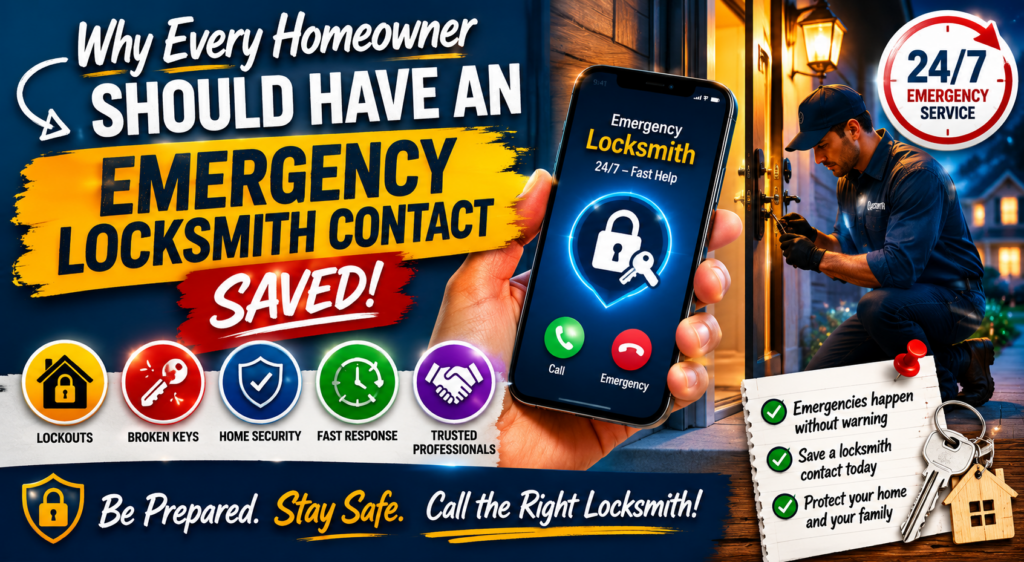
Most homeowners don’t think about locksmith services until they suddenly need help. A lost key, broken lock, or home lockout can happen without warning and often at the worst possible time. In stressful moments like these, searching for a reliable locksmith can waste valuable time and increase frustration.
That’s why every homeowner should keep the contact information of a trusted emergency locksmith saved in their phone. Having quick access to professional help can make emergencies easier, safer, and less stressful.
In this blog, we’ll explain why saving an emergency locksmith contact is a smart decision and how it can help protect your home and family.
Home lockouts are more common than people think. You might leave your keys inside, lose them while shopping, or accidentally break a key in the lock. These situations often happen late at night or when you’re in a hurry.
Without a locksmith contact ready, you may spend valuable time searching online for help while standing outside your home. This can be frustrating and even unsafe in bad weather or unfamiliar areas.
Having a trusted emergency locksmith saved in advance means you can get help quickly whenever a lockout happens.
In emergencies, every minute matters. Whether you’re locked outside with children, stuck outside during extreme weather, or dealing with a damaged lock after a break-in, fast service is important.
A saved locksmith contact allows you to call immediately instead of comparing services under pressure. Reliable locksmiths often provide 24/7 emergency assistance and can arrive quickly to solve the issue.
Quick response times help reduce stress and improve your overall safety during unexpected situations.
Unfortunately, not every locksmith service is trustworthy. During emergencies, some homeowners end up calling unknown companies that charge hidden fees or provide poor-quality work.
By researching and saving a trusted locksmith ahead of time, you avoid making rushed decisions during stressful moments. You can check reviews, verify credentials, and choose a company you feel comfortable with before an emergency occurs.
This protects you from scams and ensures your home security is handled professionally.
A break-in or attempted burglary can leave your locks damaged and your home vulnerable. In these situations, you need immediate help to secure your doors and restore safety.
An emergency locksmith can repair or replace damaged locks quickly and recommend stronger security solutions if needed. Fast action reduces the risk of another intrusion and helps homeowners feel safe again.
Keeping a locksmith’s number saved ensures you know exactly who to call during these urgent situations.
Keys can snap inside locks without warning, especially if the key is old or the lock is damaged. Jammed locks can also prevent you from entering or securing your home properly.
Trying to fix these problems yourself can cause more damage to the lock. Professional locksmiths have specialized tools to safely remove broken keys and repair lock mechanisms without harming your door.
Having an emergency contact ready means these problems can be solved quickly and correctly.
Modern homes are increasingly using smart locks and keyless entry systems. While these systems offer convenience, they can sometimes experience technical issues like dead batteries, software problems, or connectivity failures.
An experienced locksmith can help troubleshoot these issues and restore access to your home safely. Some locksmiths also specialize in smart security systems and can recommend upgrades when needed.
Saving a locksmith contact ensures you have support for both traditional and modern lock systems.
Knowing you have reliable help available provides peace of mind for the entire family. Emergencies become less stressful when you already know who to call and trust.
This is especially important for households with children, elderly family members, or people who live alone. Quick access to professional help can make difficult situations easier to manage.
Preparedness is a key part of home security, and saving a locksmith’s number is a simple but valuable step.
Locksmiths don’t just help during emergencies. They are also useful when moving into a new home, upgrading locks, or rekeying existing locks for better security.
Having a trusted locksmith already saved makes these projects easier to handle. You won’t need to spend time searching for reliable service providers when security updates are needed.
Building a relationship with a dependable locksmith can benefit homeowners long-term.
During lock problems, many homeowners attempt DIY solutions using tools, cards, or force. Unfortunately, this often causes additional damage to doors, locks, or frames.
Calling a professional locksmith early can prevent expensive repairs and ensure the problem is handled correctly the first time.
Professional service protects both your property and your security system from unnecessary damage.
Saving an emergency locksmith contact only takes a few minutes, but it can save hours of stress later. It’s one of the simplest home security preparations you can make.
Store the number in your phone, keep it written somewhere safe, and share it with trusted family members if necessary.
Being prepared for unexpected situations helps you stay calm and respond quickly when problems happen.
Lock and key emergencies can happen at any time, often when you least expect them. From home lockouts to damaged locks and smart lock failures, having a trusted emergency locksmith saved in your contacts can make a huge difference.
It helps you get faster assistance, avoid scams, reduce stress, and keep your home secure during difficult situations. A little preparation today can save you time, money, and frustration in the future.
Every homeowner should treat a trusted locksmith contact as an essential part of their home safety plan.
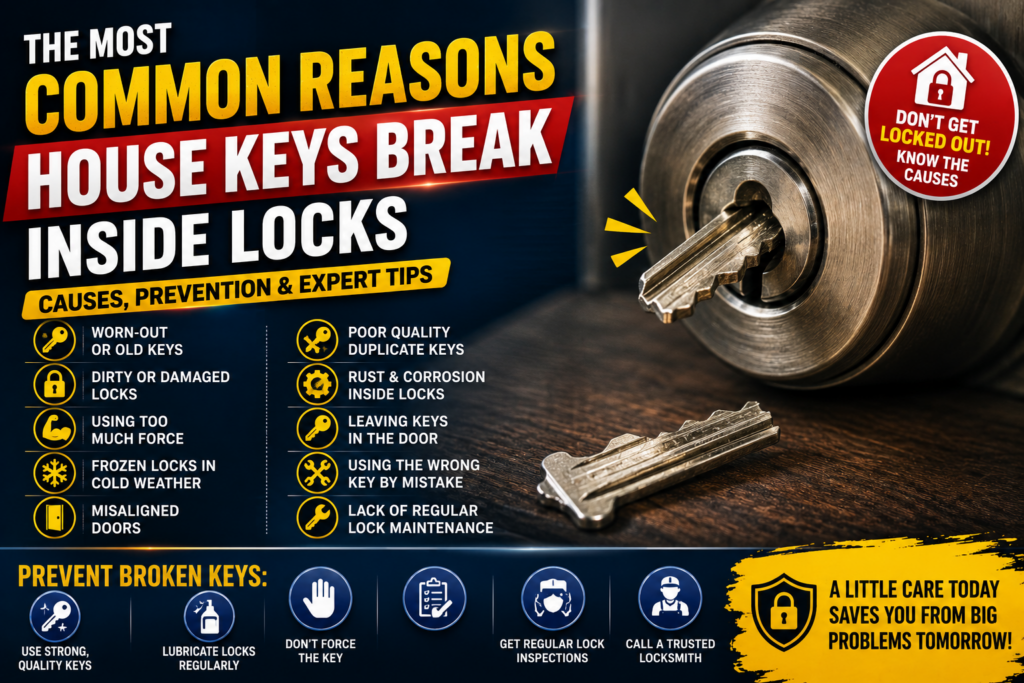
A broken key stuck inside a lock can quickly turn into a stressful situation. It often happens when homeowners are rushing, dealing with cold weather, or using an old key without realizing it is weak. Once the key snaps, you may find yourself locked out of your home or unable to secure your door properly.
While this problem is common, many people don’t understand why keys break in the first place. In most cases, there are warning signs before it happens. Understanding the causes can help you prevent damage, avoid expensive repairs, and keep your locks working smoothly.
In this blog, we’ll explain the most common reasons house keys break inside locks and what you can do to prevent it.
One of the main reasons keys break is simple wear and tear. House keys are used daily, and over time, the metal weakens. Small cracks can develop that are difficult to notice until the key finally snaps.
Older keys also become thinner from years of friction inside the lock. This makes them more fragile and likely to break under pressure.
If your key looks bent, worn, or damaged, it’s best to replace it before it causes a lock problem.
Sometimes the problem isn’t the key—it’s the lock itself. Dirt, dust, rust, and debris can build up inside the lock mechanism over time. This creates resistance when you insert or turn the key.
When homeowners force the key to turn against that resistance, the metal may snap inside the lock.
Regular lock maintenance and occasional lubrication can help keep the mechanism working smoothly and reduce stress on the key.
Many people apply excessive force when a lock becomes difficult to turn. This is especially common during cold weather or when a lock starts wearing out.
Keys are not designed to handle heavy pressure. Twisting too hard can weaken the key instantly and cause it to break.
If your key doesn’t turn easily, stop forcing it. The issue may require lock repair, lubrication, or professional attention.
Not all duplicate keys are made with the same quality. Cheap copies are often made from weaker materials or cut incorrectly, which can affect how they fit inside the lock.
A poorly cut key may not align properly with the lock pins, causing extra pressure during use. Over time, this can lead to bending or breaking.
Always get duplicate keys made by a trusted locksmith to ensure proper quality and durability.
In colder climates, locks can freeze due to moisture inside the mechanism. When this happens, the key may not turn smoothly.
Many homeowners try to force the key, which increases the risk of snapping it inside the lock.
Using lock de-icer products or gently warming the key can help avoid damage during freezing temperatures.
Sometimes the issue comes from the door itself rather than the lock. If a door shifts due to humidity, settling, or loose hinges, the lock and strike plate may become misaligned.
When this happens, extra pressure is placed on the key during locking or unlocking. This repeated strain can eventually weaken and break the key.
Fixing door alignment issues early helps protect both the lock and the key from damage.
Locks exposed to moisture and outdoor conditions can develop rust over time. Rust creates friction inside the mechanism and makes the lock harder to operate.
As resistance increases, homeowners often twist the key harder than normal, which can cause it to snap.
Replacing rusty locks or cleaning them regularly can improve performance and prevent future problems.
Many people accidentally leave their keys in the lock while carrying groceries, talking on the phone, or rushing inside. If the key gets bumped or the door closes suddenly, it can bend or weaken the metal.
Once a key becomes bent, it is much more likely to break during future use.
Removing keys carefully and avoiding unnecessary pressure helps extend their lifespan.
Trying to force the wrong key into a lock can damage both the key and the lock mechanism. Some keys may look similar but have different cuts that don’t properly match the pins inside the lock.
Forcing an incorrect key can weaken it or jam the lock completely.
Always double-check the key before inserting it, especially if you carry multiple similar-looking keys.
Many homeowners rarely think about lock maintenance until a problem happens. Over time, locks naturally collect dust and experience wear from daily use.
Without maintenance, locks become harder to operate and place more pressure on keys. A simple yearly inspection and lubrication can help locks last longer and work smoothly.
Preventive care is one of the easiest ways to avoid broken keys and unexpected lockouts.
A broken key inside a lock is frustrating, but in most cases, it can be prevented. Worn keys, dirty locks, excessive force, and poor maintenance are some of the most common causes.
By paying attention to warning signs and maintaining your locks regularly, you can avoid unnecessary stress and expensive repairs. Replacing old keys and fixing lock problems early helps keep your home secure and your locks functioning properly for years to come.
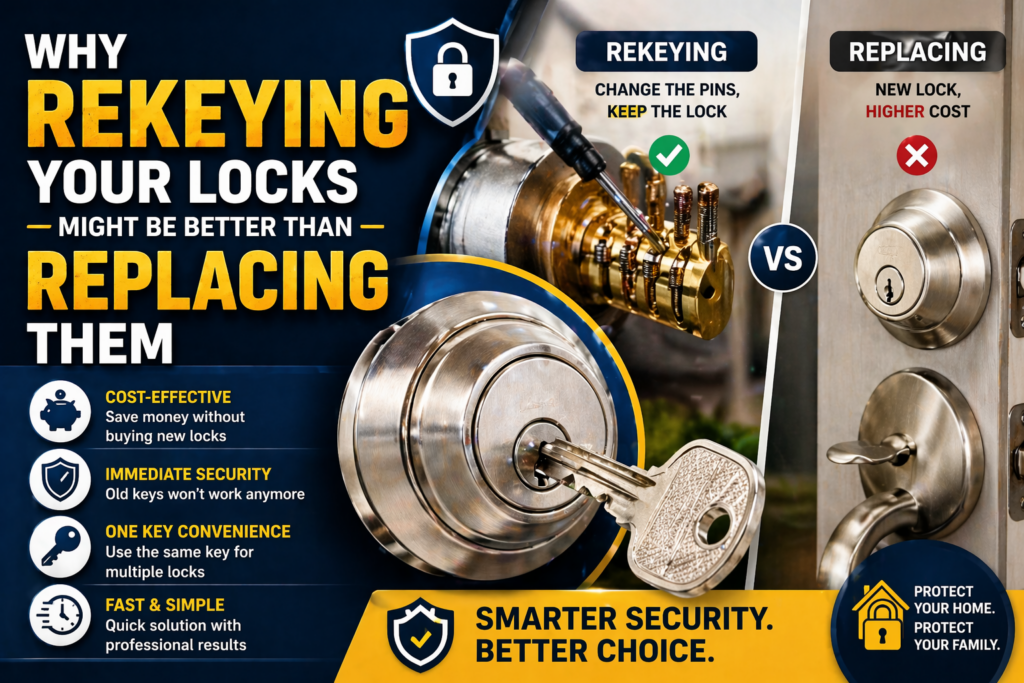
When it comes to home security, many people think replacing locks is the only solution. While replacing locks is sometimes necessary, it’s not always the best or most cost-effective option. In many cases, rekeying your locks can provide the same level of security at a lower cost and with less effort.
Rekeying is a simple process that changes how your lock works internally, so old keys no longer open it. It’s a smart choice for homeowners who want better security without replacing the entire lock system. In this blog, we’ll explain what rekeying is, how it works, and when it’s the better option.
Rekeying a lock means changing the internal pins inside the lock so it works with a new key. The outside hardware stays the same, but the old key will no longer work.
A locksmith removes the lock cylinder, replaces the pins, and creates a new key that matches the updated configuration. This process is quick and does not require replacing the entire lock.
Rekeying is a simple yet powerful way to improve security without making major changes to your doors.
One of the biggest advantages of rekeying is cost savings. Replacing locks involves buying new hardware and paying for installation, which can be expensive.
Rekeying, on the other hand, uses your existing locks, so you only pay for the labor and minor internal parts. This makes it a budget-friendly option for homeowners who want to improve security without spending too much.
For multiple doors, the savings can be significant compared to full lock replacement.
When you move into a new home, you don’t know who might still have a copy of the keys. Previous owners, tenants, or workers could still have access.
Rekeying your locks ensures that old keys no longer work, giving you full control over your home’s security.
It’s one of the first steps experts recommend for new homeowners, as it provides peace of mind without the cost of replacing every lock.
Losing your keys can create a serious security risk. Even if you think they are lost somewhere safe, you can’t be sure they won’t fall into the wrong hands.
Rekeying your locks immediately solves this problem. It makes your old keys useless and prevents unauthorized access.
This is a quick and effective way to secure your home without needing to install new locks.
Another hidden benefit of rekeying is convenience. A locksmith can rekey multiple locks so they all work with the same key.
This means you don’t have to carry a bunch of different keys for different doors. One key can open your front door, back door, and even side entrances.
This makes daily life easier while still maintaining strong security.
Replacing locks can take time, especially if you have multiple doors or need special hardware. Rekeying is usually much faster because it works with your existing locks.
A professional locksmith can often complete the job in a single visit. This makes it a great option when you need quick results, such as after losing your keys or moving into a new home.
Fast service means less inconvenience and immediate security improvement.
While rekeying has many benefits, it’s not always the right choice. If your locks are old, damaged, or outdated, replacing them may be a better option.
Also, if you want to upgrade to high-security or smart locks, replacement is necessary. Rekeying only changes the internal key system, not the lock’s overall strength or features.
Understanding the difference helps you choose the best option for your home.
Many homeowners choose locks that match their home’s design and style. Replacing them can sometimes affect the look of your doors.
Rekeying allows you to keep your existing hardware while improving security. This is especially useful if you have decorative or custom locks that you don’t want to replace.
You get better security without changing the appearance of your home.
Rekeying is also a more eco-friendly choice. Instead of throwing away old locks and buying new ones, you reuse your existing hardware.
This reduces waste and lowers the demand for new materials. It’s a small step, but it contributes to a more sustainable approach to home improvement.
Choosing rekeying helps both your wallet and the environment.
While some people try DIY solutions, rekeying should always be done by a professional locksmith. Proper tools and knowledge are needed to ensure the lock works correctly.
A locksmith will make sure the lock is secure, smooth to operate, and properly aligned. This guarantees your home remains safe and your locks function as expected.
Professional service also reduces the risk of future lock problems.
Rekeying your locks is a smart, simple, and cost-effective way to improve home security. It’s ideal for situations like moving into a new home, losing keys, or wanting better control over access.
While replacing locks has its place, rekeying offers many benefits without the extra cost or hassle. By understanding when to choose rekeying, you can make better decisions about your home’s safety.
In many cases, a small change inside your lock can make a big difference in protecting your home.
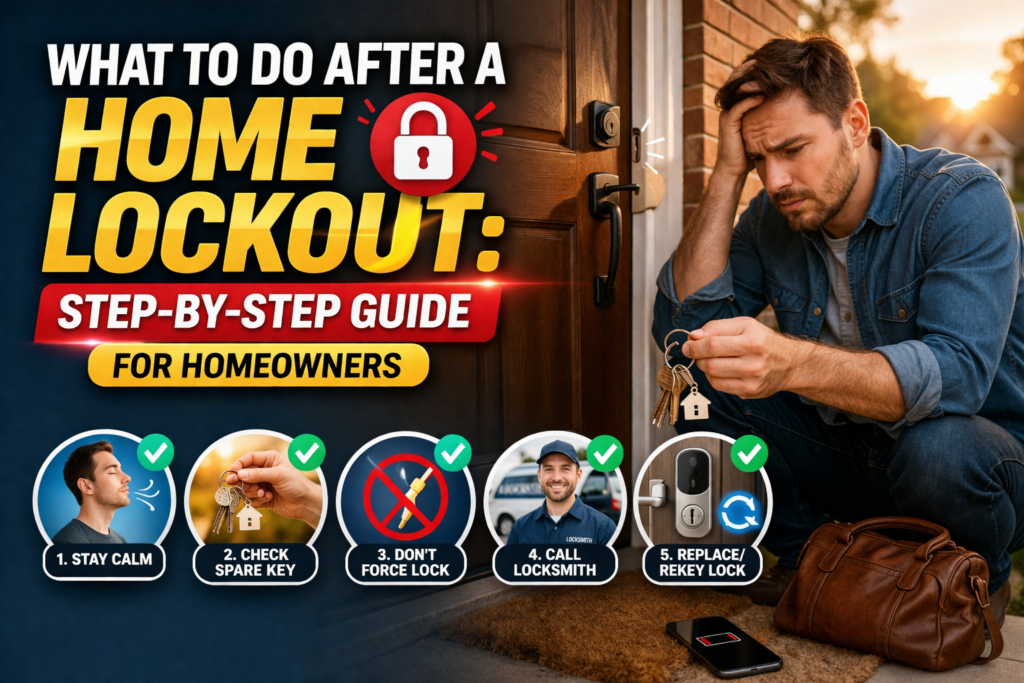
Getting locked out of your home is one of the most frustrating situations anyone can face. It often happens at the worst possible time—late at night, during bad weather, or when you’re in a hurry. Many people panic or try unsafe methods to get back inside, which can lead to damage or even injury.
The good news is that a home lockout can be handled calmly and safely if you know what to do. In this guide, we’ll walk you through simple, practical steps to follow during a lockout situation and how to avoid making costly mistakes.
The first and most important step is to stay calm. It’s easy to feel stressed or frustrated, but panicking won’t help you solve the problem. Take a deep breath and think clearly about your situation.
Check all doors and windows around your home. Sometimes, a back door or window may be unlocked. Walk around carefully and see if there’s a safe way to enter without forcing anything.
Staying calm helps you make better decisions and reduces the chances of damaging your property.
Before trying anything else, think about whether you have a spare key available. Many homeowners keep a spare key with a trusted neighbor, friend, or family member.
If you have someone nearby who holds a spare key, contact them for help. This is usually the fastest and safest way to regain access to your home.
If you don’t have a spare key, this situation can be a good reminder to create a backup plan for the future.
One of the biggest mistakes people make during a lockout is trying to force the door open. Kicking the door, using tools, or trying to break the lock can cause serious damage.
Not only can this damage your door and lock, but it may also cost much more to repair than simply calling a professional. In some cases, you may even injure yourself while trying to force entry.
It’s always better to choose a safe and professional solution instead of risking damage or harm.
If you cannot find a safe way to enter your home, the best option is to call a professional locksmith. Locksmiths are trained to handle lockouts quickly and without causing damage.
They have the right tools and experience to unlock doors safely. Most locksmiths can get you back inside within minutes.
Make sure to choose a reliable and trusted locksmith service. A professional will also check your lock afterward to ensure everything is still working properly.
When a locksmith arrives, they will usually ask for proof that you live at the property. This is an important step to protect homeowners from unauthorized access.
You can show identification, a utility bill, or any document that confirms your address. If your ID is inside the house, the locksmith may verify your identity after you regain access.
This process ensures your home remains secure while solving your lockout problem.
After a lockout, it’s a good idea to think about your home security. If you lost your keys or suspect they may be in the wrong hands, rekeying or replacing the lock is a smart step.
Rekeying changes the internal mechanism of the lock so old keys no longer work. Replacing the lock gives you a completely new system.
Both options help ensure that only you and your trusted family members can access your home.
Once you’re back inside, take steps to prevent future lockouts. Having a spare key can save you a lot of stress next time.
You can give a spare key to someone you trust or use a secure lockbox outside your home. Avoid hiding keys in obvious places like under the doormat or flower pots, as these are the first places intruders check.
Planning ahead can turn a stressful situation into a minor inconvenience.
Modern technology offers solutions that can completely eliminate lockout problems. Smart locks and keyless entry systems allow you to unlock your door using a code, phone, or fingerprint.
These systems remove the need for physical keys, which means you won’t have to worry about losing them. Some smart locks even allow remote access, so you can unlock your door from anywhere.
Upgrading your locks can improve both convenience and security.
It’s always a good idea to keep important contact numbers saved in your phone. This includes a trusted locksmith, a nearby friend, or a family member.
Having these contacts ready can save you time during an emergency. Instead of searching for help under stress, you’ll know exactly who to call.
Preparation is key to handling unexpected situations smoothly.
A lockout can be frustrating, but it’s also a learning opportunity. Think about what caused the situation and how you can avoid it in the future.
Maybe you forgot your keys, misplaced them, or relied on a single entry point. Identifying the cause helps you make better decisions moving forward.
Simple changes, like double-checking your keys or upgrading your locks, can prevent the same problem from happening again.
Getting locked out of your home can be stressful, but it doesn’t have to turn into a disaster. By staying calm, avoiding risky actions, and calling a professional when needed, you can resolve the situation safely and quickly.
Taking preventive steps afterward—like creating spare keys or upgrading to smart locks—can help you avoid future lockouts. A little preparation goes a long way in keeping your home secure and your life stress-free.
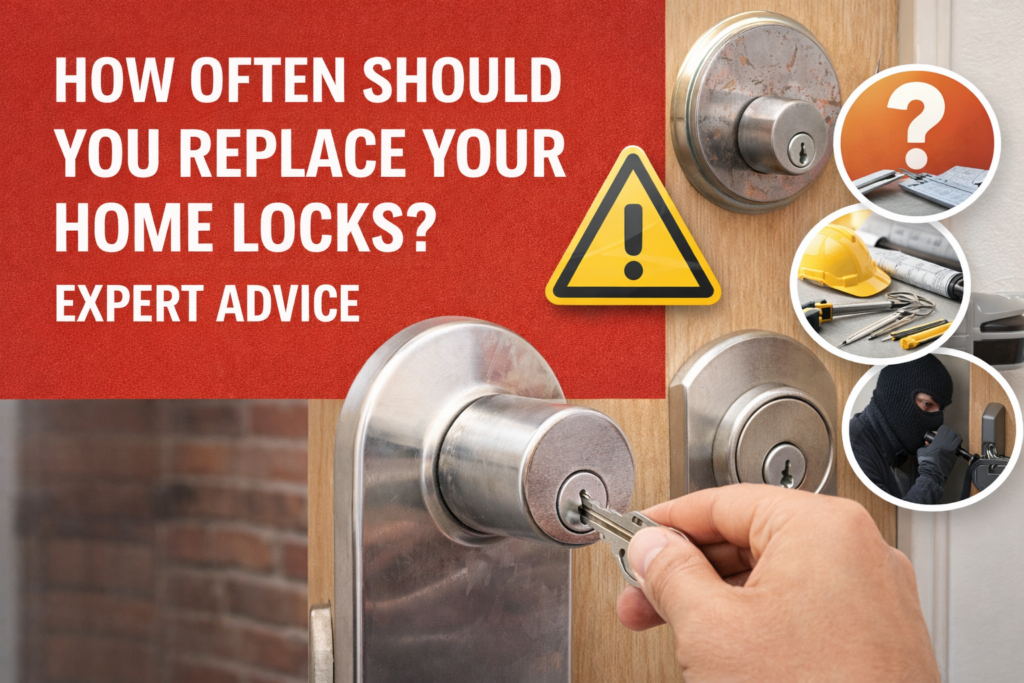
Many homeowners rarely think about their door locks until something goes wrong. However, locks play a critical role in protecting your home, family, and belongings. Over time, locks can wear out, become outdated, or lose their effectiveness.
Replacing your home locks at the right time is an important part of maintaining strong home security. While there is no single rule that fits every situation, locksmith experts recommend certain timelines and circumstances when lock replacement becomes necessary.
In this guide, we will explain how often you should replace your home locks and the common situations where changing them is the safest choice.
One of the most important times to replace your locks is when you move into a new house. Even if the previous owner seems trustworthy, you cannot know how many spare keys may still exist.
Former residents, contractors, cleaning services, or even neighbors might still have copies of the keys. This creates an unnecessary security risk for your family.
By installing new locks or rekeying the existing ones, you ensure that only you and the people you trust have access to your home. This simple step provides peace of mind and immediate control over your property’s security.
Losing your house keys can be stressful, especially if you’re not sure where they were lost. If someone finds them, they may be able to identify your address and gain access to your home.
In this situation, it’s best to replace or rekey your locks as soon as possible. Acting quickly reduces the chances of unauthorized entry.
Many locksmith professionals recommend taking this step even if you believe the keys were lost in a safe place. It’s always better to prevent a potential security risk than deal with a break-in later.
Locks experience daily use, which means they eventually wear out. Over time, internal components can become loose or damaged. You might notice the key sticking, difficulty turning the lock, or a loose handle.
These signs indicate that your lock may no longer function properly. A worn-out lock can fail when you need it most or become easier for intruders to manipulate.
Replacing aging locks ensures your doors remain secure and function smoothly every day.
Even if your locks appear to work fine, experts suggest replacing them every 7 to 10 years. Lock technology improves regularly, and newer models often provide better security features.
Modern locks may include anti-pick mechanisms, stronger materials, and better resistance to forced entry. Upgrading to newer locks helps ensure your home remains protected against evolving break-in techniques.
Regular upgrades also give homeowners the chance to install smart locks or high-security deadbolts for improved safety.
If someone has attempted to break into your home, replacing the locks should be a top priority. Even if the intruder was unsuccessful, the lock may have been weakened during the attempt.
Damage from tools or force can make the lock easier to break in the future. A locksmith can inspect the door, frame, and locking mechanism to determine the safest solution.
Upgrading to stronger locks after a break-in also helps prevent future attempts and restores your sense of security.
Home renovations often involve multiple workers entering and leaving your property. Contractors, electricians, plumbers, and other service professionals may temporarily have access to your home.
Although most workers are trustworthy, it is impossible to know if extra keys were copied or misplaced during the project.
Once renovations are complete, replacing or rekeying the locks ensures that only authorized people can access your home again.
Sometimes the reason to replace your locks isn’t damage or lost keys—it’s simply improving security. Older locks may not provide the same level of protection as modern security systems.
Upgrading to high-security deadbolts or smart locks can greatly improve your home’s safety. These locks often include features such as tamper resistance, key control, and remote access.
Making these upgrades is a proactive way to protect your home before security problems arise.
In some situations, you may not need to replace the entire lock. Rekeying is another option that changes the internal mechanism of the lock so that old keys no longer work.
This process is usually faster and more affordable than installing new locks. It is commonly recommended after moving into a new home or when keys are lost.
A professional locksmith can help determine whether rekeying or full replacement is the best choice for your situation.
Home locks are your first line of defense against unwanted entry, yet they are often overlooked until a problem occurs. Experts recommend replacing or upgrading locks when you move into a new home, lose your keys, experience a break-in attempt, or notice signs of wear and damage.
Even if none of these situations happen, upgrading your locks every few years ensures your home stays protected with modern security technology.
Taking the time to maintain and update your locks is a small investment that can make a big difference in protecting your home and family.
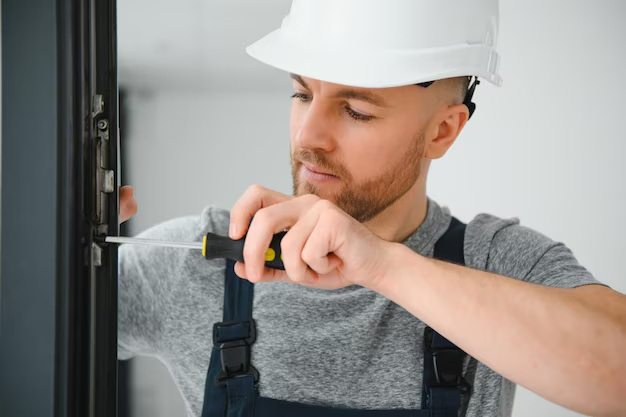
Undoubtedly, the profession of locksmithing is still vital in today’s society. Locksmiths are experts who are essential to convenience and security, whether they are making new keys, fixing locks, or assisting someone in regaining entry to a secured area. However, what qualifications are necessary to work as a locksmith, and how can one begin a career in this fulfilling field? Everything you need to know about becoming a locksmith will be covered in this write-up, including industry insights and training requirements.
The art and science of creating and breaking locks is known as locksmithing. It’s a profession that demands problem-solving abilities and attention to detail while fusing technical expertise with workmanship. Simple key copying to intricate safe repairs are among the services provided by locksmiths. They work with both residential and business clientele, which makes it a flexible and sought-after career.
Is it possible for a locksmith to unlock a safe? We will guide you on the locksmithing industry and how to enter this specialized field, whether you’re wondering “How much does a locksmith cost in the US?”
Without further delays, grab a seat as we are about to spill the beans:
It’s crucial to comprehend the work that locksmiths undertake before getting started. Among their duties are:
| Fixing and installing locks | Cutting and copying keys | Opening safes and locked doors | Advising on security | Installing cutting-edge locking mechanisms |
Usually, formal training is necessary to become a locksmith. Seek out initiatives that provide:
| Do you know?
Locksmith training is available through a variety of online courses and trade colleges. For hands-on learning, some even offer apprenticeships. |
To do their tasks well, locksmiths require a range of equipment, such as:
| Pro Tip:
Proactively purchase high-quality equipment as it is crucial to your locksmith career’s success. |
Locksmiths must hold a license in several US states. Also, credibility and employment opportunities can be improved with certifications like those provided by the Associated Locksmiths of America (ALOA).
Typically, licensing entails:
| Clearing a certification test | Getting through a background investigation | Finishing a training course |
Do you know that apprenticeships give you the chance to work under seasoned locksmiths and learn the ins and outs of the trade? Well, it is pertinent to understand that this practical training is crucial for developing confidence and expertise.
After receiving training and certification, you can choose to start your own locksmith business or work for an established company. While independent locksmiths are free to set their hours, contractors can take advantage of stable employment and mentorship opportunities.
Have you ever wondered how the leading locksmiths have excelled? Well, we have dug out the secrets – just for you:
A thorough understanding of security systems, safes, and locks is imperative for becoming a successful locksmith.
It is pertinent for you to carry out rapid thinking to diagnose and fix lock-related problems.
Two-way communication and establishing client trust are key components of customer service skills.
As a locksmith – when handling tiny, complex machinery, accuracy is essential.
Excellent hand-eye coordination for the effective use of locks and tools serves as a base for becoming a successful locksmith!
Without a second thought, yes! A locksmith can easily unlock a safe. They can open without damaging them by employing specific equipment and methods. A variety of methods such as picking or manipulation of locks are some of the ways used by a locksmith to unlock a safe! For high-security safes in particular, this ability necessitates extensive training and expertise.
Depending on the service, hiring a locksmith in the US might cost different amounts. Below is a summary of average expenses:
To sum up, a rewarding career opportunity for people who enjoy solving security issues and problem-solving – is becoming a locksmith. With the correct instruction, equipment, and credentials, you may succeed in this job. When you’re prepared to begin your locksmithing career, look into training courses and get some practical experience. You may make a fulfilling career in this ageless field with commitment and talent.
Depending on the program and state standards, training and certification might take anywhere from six months to two years.
Yes, in a lot of states. Locksmiths who are licensed are guaranteed to adhere to industry standards and do business lawfully.
Indeed, locksmiths are qualified to install, fix, and program smart security systems and electronic locks.
Indeed, working as a locksmith provides employment security, high-income potential, and the fulfilment that comes from assisting others.
The majority of keys can be copied, however certain high-security keys could need certain permissions or equipment.
Safe technicians are experts in opening, fixing, and maintaining safes, even though they are also locksmiths.
Reputable locksmiths provide security by confirming ownership or authorization before making duplicate keys.
Locksmiths often make between $40,000 and $60,000 a year, with experts making more.
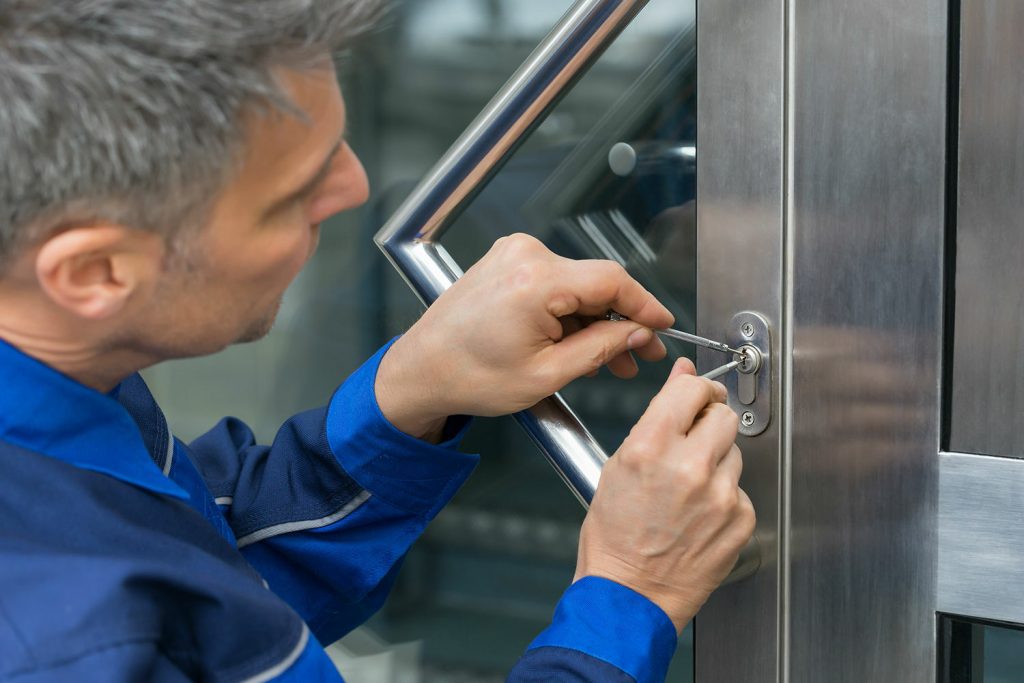
Experiencing problems with your key or lock can happen to anyone. However, while it is a common occurrence, many individuals find it worrisome. In these instances, you must be aware of the necessary steps to take. One of the fundamental points is contacting a locksmith. Alas, this can seem easier said than done. Everyone may be confused about questions like “When to call a locksmith?” Locksmith Reston VA “What can I expect?” The good news is, if you have begun asking these questions, you have started the journey!
In this article, we will guide you further into the world of choosing and collaborating with a locksmith that is right for you. Unfortunately, if you cannot successfully navigate the market, the chances of getting scammed are high. Nonetheless, they are not unavoidable. So, if you are ready to know more, let’s get right into it.
Contrary to popular belief, there are a few instances when calling a locksmith can be the right move. For example, if you find your key has been jammed into the keyhole, you should not try and force it to come out. Such dramatic movement can result in the key breaking or getting chipped inside the hole. Therefore, for any circumstances, remember to act with a clear mind and keep your nerves in check.
Furthermore, try your best not to deal with a broken lock. If you find that the mechanism of your house is becoming, for example, rusted or worn out it is best to act fast. Often, individuals make the rookie mistake of undermining the tiny rusted area around their lock. This pesky infestation can cause the lock to function incorrectly. Such problems will likely peek their heads up in the most unpredictable moments- leaving you vulnerable to break-ins.
Also, your initial observations can help you determine the severity of the lock’s conditions. When the time comes to call in the professional, it is best to be prepared and ready to have the work done. Once the expert arrives, the task can be done quickly and with maximum communication. Again, there are methods of regaining control in such inherently strenuous situations.
If you have ever thought to transverse down the pathway of home security systems, you know that this field of work can be particularly daunting. Usually, this is because of the plethora of service and product options available. How can one select the right choice for their home and priorities? A possible solution is to reach out to a reliable locksmith.
While not every locksmith may have the intrinsic knowledge to answer every one of your home security questions, they can guide you to the right individuals. In this world, you must establish a useful network of support. As such, searching credible agencies for your endeavors is a vital task to complete before you find yourself in hot waters.
One might begin by researching the standard of services provided by Baldino’s Lock & Key. While this might not be your final choice, they can help raise your standard of expectations. You should find yourself with the assistance of individuals who can solve immediate problems while helping you prevent them in the future. What were the mistakes or acts of negligence that caused this issue in the first place? Tinkering with this curiosity will help you in the long run.
For starters, you should expect quick and efficient responses. No one wants to wait locked outside of their home for the locksmith to stop dilly-dallying. A professional agency will issue you an estimated response time and (perhaps) guide you on the phone about any practical steps you can take.
Moreover- upon arrival- the locksmith should not hesitate to show you their credentials. This will include their license, any necessary tools they might need and the rundown of their plan. Also, while initially calling for their assistance, you should ensure that they are insured professionals who can guarantee the resolution of your security system without further headaches. If they are side-stepping in answering any of these queries or requests, it is best to cut the line short before getting into an increasingly messy situation.
You must not feel as though a lack of control is inevitable in these instances. Again, it is a common occurrence that anyone can have to face. It is merely important that you are aware of the general steps one can take to deal with it.
Knowing when and how to call a locksmith can be uncharted territory. Therefore, it can be strenuous for individuals to deal with- however, this should not justify negligence. The problem will only become bigger if you try to ignore it. Hopefully, with the points above, you feel more aware of how to tackle these circumstances.