Your Key to Protection
Licensed In VA, MD, DC
"Your Key to Protection"

Call for a FREE quote:
Call for Service:
Call for Service:
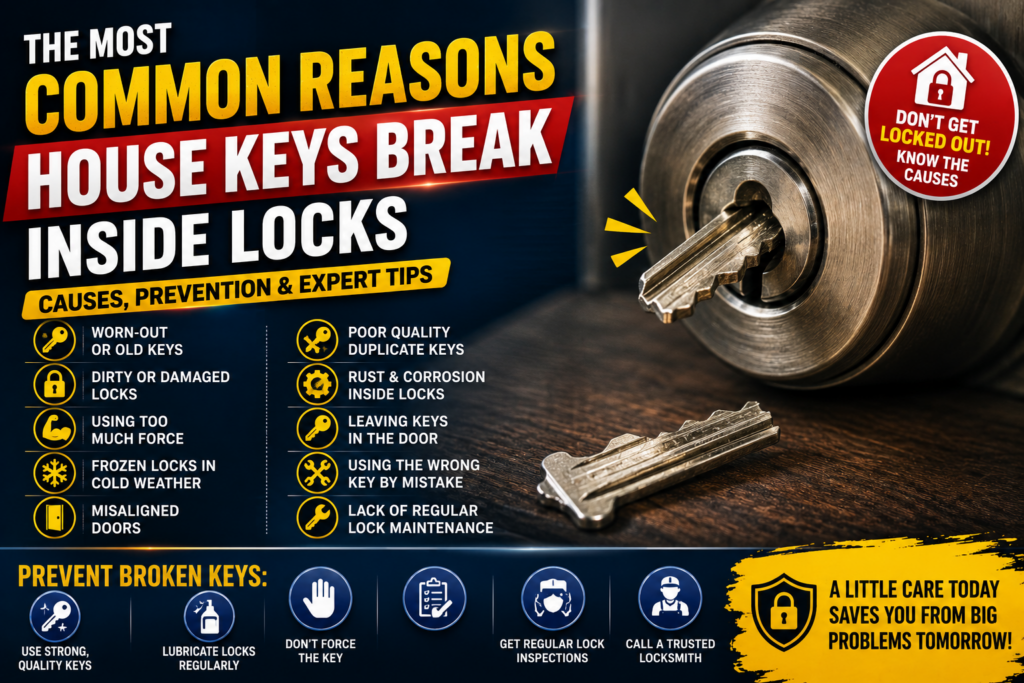
A broken key stuck inside a lock can quickly turn into a stressful situation. It often happens when homeowners are rushing, dealing with cold weather, or using an old key without realizing it is weak. Once the key snaps, you may find yourself locked out of your home or unable to secure your door properly.
While this problem is common, many people don’t understand why keys break in the first place. In most cases, there are warning signs before it happens. Understanding the causes can help you prevent damage, avoid expensive repairs, and keep your locks working smoothly.
In this blog, we’ll explain the most common reasons house keys break inside locks and what you can do to prevent it.
One of the main reasons keys break is simple wear and tear. House keys are used daily, and over time, the metal weakens. Small cracks can develop that are difficult to notice until the key finally snaps.
Older keys also become thinner from years of friction inside the lock. This makes them more fragile and likely to break under pressure.
If your key looks bent, worn, or damaged, it’s best to replace it before it causes a lock problem.
Sometimes the problem isn’t the key—it’s the lock itself. Dirt, dust, rust, and debris can build up inside the lock mechanism over time. This creates resistance when you insert or turn the key.
When homeowners force the key to turn against that resistance, the metal may snap inside the lock.
Regular lock maintenance and occasional lubrication can help keep the mechanism working smoothly and reduce stress on the key.
Many people apply excessive force when a lock becomes difficult to turn. This is especially common during cold weather or when a lock starts wearing out.
Keys are not designed to handle heavy pressure. Twisting too hard can weaken the key instantly and cause it to break.
If your key doesn’t turn easily, stop forcing it. The issue may require lock repair, lubrication, or professional attention.
Not all duplicate keys are made with the same quality. Cheap copies are often made from weaker materials or cut incorrectly, which can affect how they fit inside the lock.
A poorly cut key may not align properly with the lock pins, causing extra pressure during use. Over time, this can lead to bending or breaking.
Always get duplicate keys made by a trusted locksmith to ensure proper quality and durability.
In colder climates, locks can freeze due to moisture inside the mechanism. When this happens, the key may not turn smoothly.
Many homeowners try to force the key, which increases the risk of snapping it inside the lock.
Using lock de-icer products or gently warming the key can help avoid damage during freezing temperatures.
Sometimes the issue comes from the door itself rather than the lock. If a door shifts due to humidity, settling, or loose hinges, the lock and strike plate may become misaligned.
When this happens, extra pressure is placed on the key during locking or unlocking. This repeated strain can eventually weaken and break the key.
Fixing door alignment issues early helps protect both the lock and the key from damage.
Locks exposed to moisture and outdoor conditions can develop rust over time. Rust creates friction inside the mechanism and makes the lock harder to operate.
As resistance increases, homeowners often twist the key harder than normal, which can cause it to snap.
Replacing rusty locks or cleaning them regularly can improve performance and prevent future problems.
Many people accidentally leave their keys in the lock while carrying groceries, talking on the phone, or rushing inside. If the key gets bumped or the door closes suddenly, it can bend or weaken the metal.
Once a key becomes bent, it is much more likely to break during future use.
Removing keys carefully and avoiding unnecessary pressure helps extend their lifespan.
Trying to force the wrong key into a lock can damage both the key and the lock mechanism. Some keys may look similar but have different cuts that don’t properly match the pins inside the lock.
Forcing an incorrect key can weaken it or jam the lock completely.
Always double-check the key before inserting it, especially if you carry multiple similar-looking keys.
Many homeowners rarely think about lock maintenance until a problem happens. Over time, locks naturally collect dust and experience wear from daily use.
Without maintenance, locks become harder to operate and place more pressure on keys. A simple yearly inspection and lubrication can help locks last longer and work smoothly.
Preventive care is one of the easiest ways to avoid broken keys and unexpected lockouts.
A broken key inside a lock is frustrating, but in most cases, it can be prevented. Worn keys, dirty locks, excessive force, and poor maintenance are some of the most common causes.
By paying attention to warning signs and maintaining your locks regularly, you can avoid unnecessary stress and expensive repairs. Replacing old keys and fixing lock problems early helps keep your home secure and your locks functioning properly for years to come.