Your Key to Protection
Licensed In VA, MD, DC
"Your Key to Protection"

Call for a FREE quote:
Call for Service:
Call for Service:
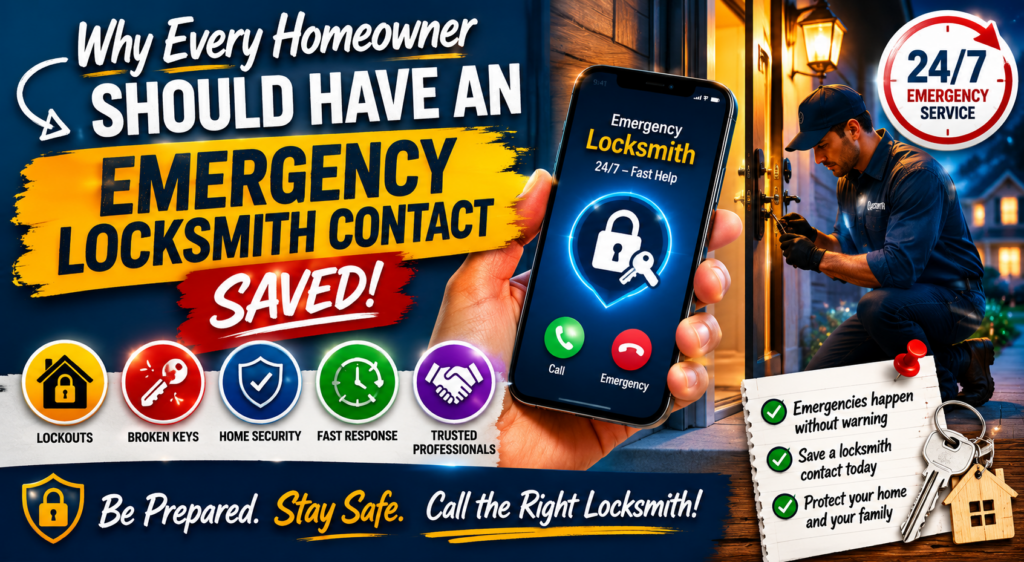
Most homeowners don’t think about locksmith services until they suddenly need help. A lost key, broken lock, or home lockout can happen without warning and often at the worst possible time. In stressful moments like these, searching for a reliable locksmith can waste valuable time and increase frustration.
That’s why every homeowner should keep the contact information of a trusted emergency locksmith saved in their phone. Having quick access to professional help can make emergencies easier, safer, and less stressful.
In this blog, we’ll explain why saving an emergency locksmith contact is a smart decision and how it can help protect your home and family.
Home lockouts are more common than people think. You might leave your keys inside, lose them while shopping, or accidentally break a key in the lock. These situations often happen late at night or when you’re in a hurry.
Without a locksmith contact ready, you may spend valuable time searching online for help while standing outside your home. This can be frustrating and even unsafe in bad weather or unfamiliar areas.
Having a trusted emergency locksmith saved in advance means you can get help quickly whenever a lockout happens.
In emergencies, every minute matters. Whether you’re locked outside with children, stuck outside during extreme weather, or dealing with a damaged lock after a break-in, fast service is important.
A saved locksmith contact allows you to call immediately instead of comparing services under pressure. Reliable locksmiths often provide 24/7 emergency assistance and can arrive quickly to solve the issue.
Quick response times help reduce stress and improve your overall safety during unexpected situations.
Unfortunately, not every locksmith service is trustworthy. During emergencies, some homeowners end up calling unknown companies that charge hidden fees or provide poor-quality work.
By researching and saving a trusted locksmith ahead of time, you avoid making rushed decisions during stressful moments. You can check reviews, verify credentials, and choose a company you feel comfortable with before an emergency occurs.
This protects you from scams and ensures your home security is handled professionally.
A break-in or attempted burglary can leave your locks damaged and your home vulnerable. In these situations, you need immediate help to secure your doors and restore safety.
An emergency locksmith can repair or replace damaged locks quickly and recommend stronger security solutions if needed. Fast action reduces the risk of another intrusion and helps homeowners feel safe again.
Keeping a locksmith’s number saved ensures you know exactly who to call during these urgent situations.
Keys can snap inside locks without warning, especially if the key is old or the lock is damaged. Jammed locks can also prevent you from entering or securing your home properly.
Trying to fix these problems yourself can cause more damage to the lock. Professional locksmiths have specialized tools to safely remove broken keys and repair lock mechanisms without harming your door.
Having an emergency contact ready means these problems can be solved quickly and correctly.
Modern homes are increasingly using smart locks and keyless entry systems. While these systems offer convenience, they can sometimes experience technical issues like dead batteries, software problems, or connectivity failures.
An experienced locksmith can help troubleshoot these issues and restore access to your home safely. Some locksmiths also specialize in smart security systems and can recommend upgrades when needed.
Saving a locksmith contact ensures you have support for both traditional and modern lock systems.
Knowing you have reliable help available provides peace of mind for the entire family. Emergencies become less stressful when you already know who to call and trust.
This is especially important for households with children, elderly family members, or people who live alone. Quick access to professional help can make difficult situations easier to manage.
Preparedness is a key part of home security, and saving a locksmith’s number is a simple but valuable step.
Locksmiths don’t just help during emergencies. They are also useful when moving into a new home, upgrading locks, or rekeying existing locks for better security.
Having a trusted locksmith already saved makes these projects easier to handle. You won’t need to spend time searching for reliable service providers when security updates are needed.
Building a relationship with a dependable locksmith can benefit homeowners long-term.
During lock problems, many homeowners attempt DIY solutions using tools, cards, or force. Unfortunately, this often causes additional damage to doors, locks, or frames.
Calling a professional locksmith early can prevent expensive repairs and ensure the problem is handled correctly the first time.
Professional service protects both your property and your security system from unnecessary damage.
Saving an emergency locksmith contact only takes a few minutes, but it can save hours of stress later. It’s one of the simplest home security preparations you can make.
Store the number in your phone, keep it written somewhere safe, and share it with trusted family members if necessary.
Being prepared for unexpected situations helps you stay calm and respond quickly when problems happen.
Lock and key emergencies can happen at any time, often when you least expect them. From home lockouts to damaged locks and smart lock failures, having a trusted emergency locksmith saved in your contacts can make a huge difference.
It helps you get faster assistance, avoid scams, reduce stress, and keep your home secure during difficult situations. A little preparation today can save you time, money, and frustration in the future.
Every homeowner should treat a trusted locksmith contact as an essential part of their home safety plan.
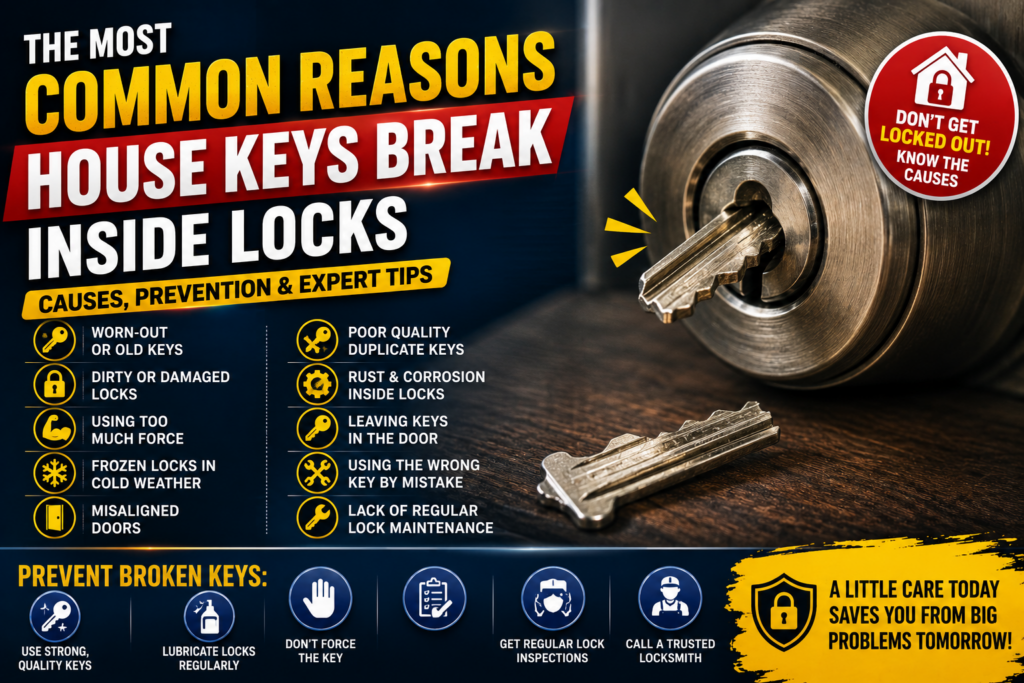
A broken key stuck inside a lock can quickly turn into a stressful situation. It often happens when homeowners are rushing, dealing with cold weather, or using an old key without realizing it is weak. Once the key snaps, you may find yourself locked out of your home or unable to secure your door properly.
While this problem is common, many people don’t understand why keys break in the first place. In most cases, there are warning signs before it happens. Understanding the causes can help you prevent damage, avoid expensive repairs, and keep your locks working smoothly.
In this blog, we’ll explain the most common reasons house keys break inside locks and what you can do to prevent it.
One of the main reasons keys break is simple wear and tear. House keys are used daily, and over time, the metal weakens. Small cracks can develop that are difficult to notice until the key finally snaps.
Older keys also become thinner from years of friction inside the lock. This makes them more fragile and likely to break under pressure.
If your key looks bent, worn, or damaged, it’s best to replace it before it causes a lock problem.
Sometimes the problem isn’t the key—it’s the lock itself. Dirt, dust, rust, and debris can build up inside the lock mechanism over time. This creates resistance when you insert or turn the key.
When homeowners force the key to turn against that resistance, the metal may snap inside the lock.
Regular lock maintenance and occasional lubrication can help keep the mechanism working smoothly and reduce stress on the key.
Many people apply excessive force when a lock becomes difficult to turn. This is especially common during cold weather or when a lock starts wearing out.
Keys are not designed to handle heavy pressure. Twisting too hard can weaken the key instantly and cause it to break.
If your key doesn’t turn easily, stop forcing it. The issue may require lock repair, lubrication, or professional attention.
Not all duplicate keys are made with the same quality. Cheap copies are often made from weaker materials or cut incorrectly, which can affect how they fit inside the lock.
A poorly cut key may not align properly with the lock pins, causing extra pressure during use. Over time, this can lead to bending or breaking.
Always get duplicate keys made by a trusted locksmith to ensure proper quality and durability.
In colder climates, locks can freeze due to moisture inside the mechanism. When this happens, the key may not turn smoothly.
Many homeowners try to force the key, which increases the risk of snapping it inside the lock.
Using lock de-icer products or gently warming the key can help avoid damage during freezing temperatures.
Sometimes the issue comes from the door itself rather than the lock. If a door shifts due to humidity, settling, or loose hinges, the lock and strike plate may become misaligned.
When this happens, extra pressure is placed on the key during locking or unlocking. This repeated strain can eventually weaken and break the key.
Fixing door alignment issues early helps protect both the lock and the key from damage.
Locks exposed to moisture and outdoor conditions can develop rust over time. Rust creates friction inside the mechanism and makes the lock harder to operate.
As resistance increases, homeowners often twist the key harder than normal, which can cause it to snap.
Replacing rusty locks or cleaning them regularly can improve performance and prevent future problems.
Many people accidentally leave their keys in the lock while carrying groceries, talking on the phone, or rushing inside. If the key gets bumped or the door closes suddenly, it can bend or weaken the metal.
Once a key becomes bent, it is much more likely to break during future use.
Removing keys carefully and avoiding unnecessary pressure helps extend their lifespan.
Trying to force the wrong key into a lock can damage both the key and the lock mechanism. Some keys may look similar but have different cuts that don’t properly match the pins inside the lock.
Forcing an incorrect key can weaken it or jam the lock completely.
Always double-check the key before inserting it, especially if you carry multiple similar-looking keys.
Many homeowners rarely think about lock maintenance until a problem happens. Over time, locks naturally collect dust and experience wear from daily use.
Without maintenance, locks become harder to operate and place more pressure on keys. A simple yearly inspection and lubrication can help locks last longer and work smoothly.
Preventive care is one of the easiest ways to avoid broken keys and unexpected lockouts.
A broken key inside a lock is frustrating, but in most cases, it can be prevented. Worn keys, dirty locks, excessive force, and poor maintenance are some of the most common causes.
By paying attention to warning signs and maintaining your locks regularly, you can avoid unnecessary stress and expensive repairs. Replacing old keys and fixing lock problems early helps keep your home secure and your locks functioning properly for years to come.
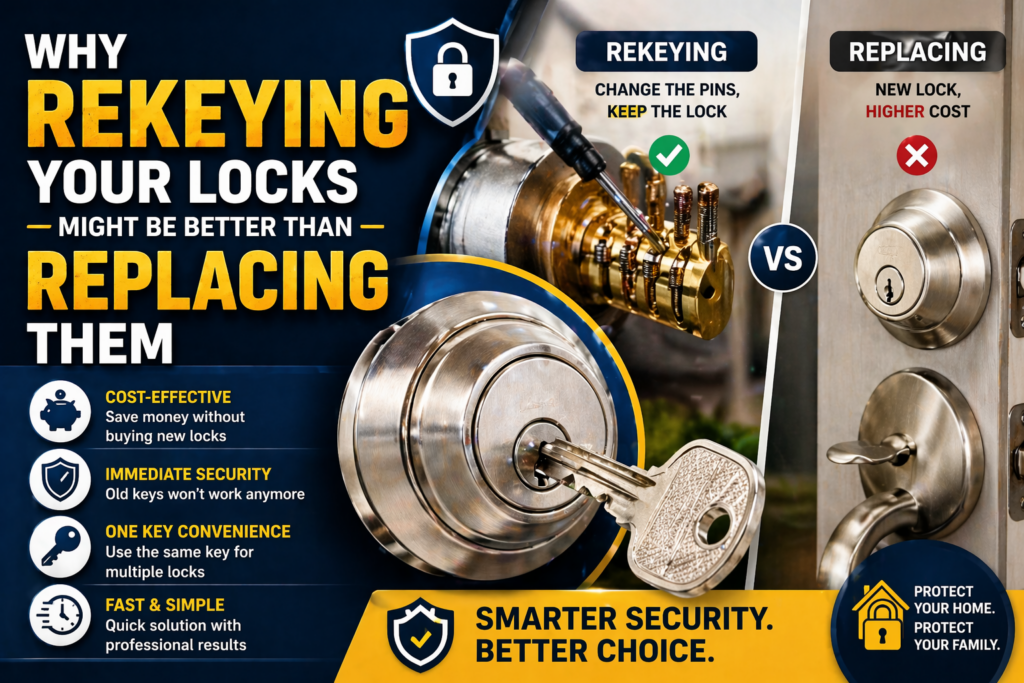
When it comes to home security, many people think replacing locks is the only solution. While replacing locks is sometimes necessary, it’s not always the best or most cost-effective option. In many cases, rekeying your locks can provide the same level of security at a lower cost and with less effort.
Rekeying is a simple process that changes how your lock works internally, so old keys no longer open it. It’s a smart choice for homeowners who want better security without replacing the entire lock system. In this blog, we’ll explain what rekeying is, how it works, and when it’s the better option.
Rekeying a lock means changing the internal pins inside the lock so it works with a new key. The outside hardware stays the same, but the old key will no longer work.
A locksmith removes the lock cylinder, replaces the pins, and creates a new key that matches the updated configuration. This process is quick and does not require replacing the entire lock.
Rekeying is a simple yet powerful way to improve security without making major changes to your doors.
One of the biggest advantages of rekeying is cost savings. Replacing locks involves buying new hardware and paying for installation, which can be expensive.
Rekeying, on the other hand, uses your existing locks, so you only pay for the labor and minor internal parts. This makes it a budget-friendly option for homeowners who want to improve security without spending too much.
For multiple doors, the savings can be significant compared to full lock replacement.
When you move into a new home, you don’t know who might still have a copy of the keys. Previous owners, tenants, or workers could still have access.
Rekeying your locks ensures that old keys no longer work, giving you full control over your home’s security.
It’s one of the first steps experts recommend for new homeowners, as it provides peace of mind without the cost of replacing every lock.
Losing your keys can create a serious security risk. Even if you think they are lost somewhere safe, you can’t be sure they won’t fall into the wrong hands.
Rekeying your locks immediately solves this problem. It makes your old keys useless and prevents unauthorized access.
This is a quick and effective way to secure your home without needing to install new locks.
Another hidden benefit of rekeying is convenience. A locksmith can rekey multiple locks so they all work with the same key.
This means you don’t have to carry a bunch of different keys for different doors. One key can open your front door, back door, and even side entrances.
This makes daily life easier while still maintaining strong security.
Replacing locks can take time, especially if you have multiple doors or need special hardware. Rekeying is usually much faster because it works with your existing locks.
A professional locksmith can often complete the job in a single visit. This makes it a great option when you need quick results, such as after losing your keys or moving into a new home.
Fast service means less inconvenience and immediate security improvement.
While rekeying has many benefits, it’s not always the right choice. If your locks are old, damaged, or outdated, replacing them may be a better option.
Also, if you want to upgrade to high-security or smart locks, replacement is necessary. Rekeying only changes the internal key system, not the lock’s overall strength or features.
Understanding the difference helps you choose the best option for your home.
Many homeowners choose locks that match their home’s design and style. Replacing them can sometimes affect the look of your doors.
Rekeying allows you to keep your existing hardware while improving security. This is especially useful if you have decorative or custom locks that you don’t want to replace.
You get better security without changing the appearance of your home.
Rekeying is also a more eco-friendly choice. Instead of throwing away old locks and buying new ones, you reuse your existing hardware.
This reduces waste and lowers the demand for new materials. It’s a small step, but it contributes to a more sustainable approach to home improvement.
Choosing rekeying helps both your wallet and the environment.
While some people try DIY solutions, rekeying should always be done by a professional locksmith. Proper tools and knowledge are needed to ensure the lock works correctly.
A locksmith will make sure the lock is secure, smooth to operate, and properly aligned. This guarantees your home remains safe and your locks function as expected.
Professional service also reduces the risk of future lock problems.
Rekeying your locks is a smart, simple, and cost-effective way to improve home security. It’s ideal for situations like moving into a new home, losing keys, or wanting better control over access.
While replacing locks has its place, rekeying offers many benefits without the extra cost or hassle. By understanding when to choose rekeying, you can make better decisions about your home’s safety.
In many cases, a small change inside your lock can make a big difference in protecting your home.
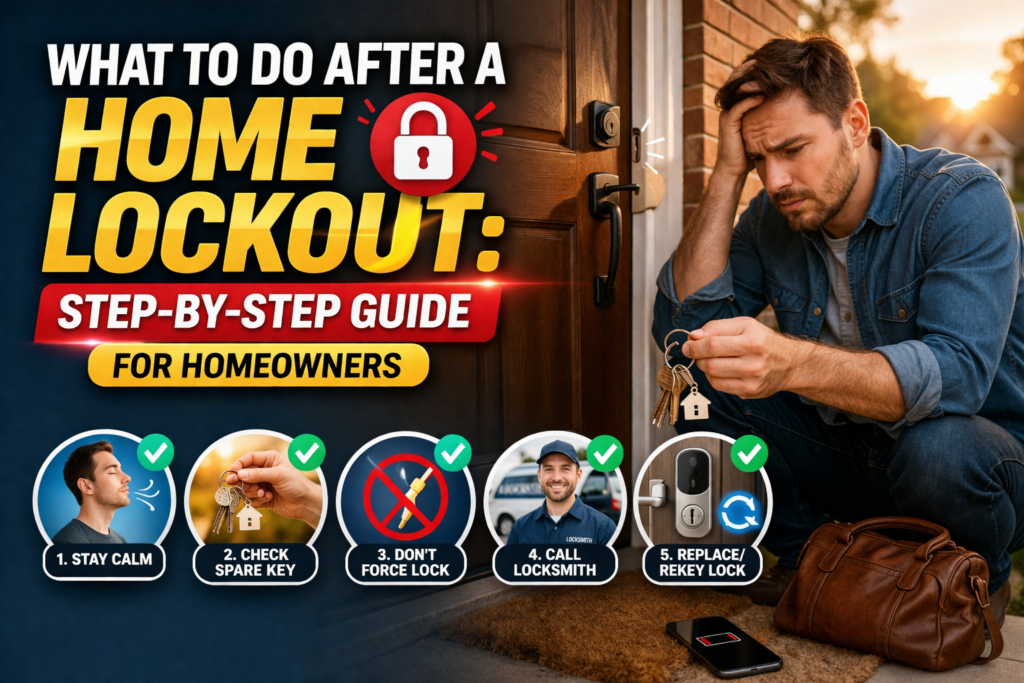
Getting locked out of your home is one of the most frustrating situations anyone can face. It often happens at the worst possible time—late at night, during bad weather, or when you’re in a hurry. Many people panic or try unsafe methods to get back inside, which can lead to damage or even injury.
The good news is that a home lockout can be handled calmly and safely if you know what to do. In this guide, we’ll walk you through simple, practical steps to follow during a lockout situation and how to avoid making costly mistakes.
The first and most important step is to stay calm. It’s easy to feel stressed or frustrated, but panicking won’t help you solve the problem. Take a deep breath and think clearly about your situation.
Check all doors and windows around your home. Sometimes, a back door or window may be unlocked. Walk around carefully and see if there’s a safe way to enter without forcing anything.
Staying calm helps you make better decisions and reduces the chances of damaging your property.
Before trying anything else, think about whether you have a spare key available. Many homeowners keep a spare key with a trusted neighbor, friend, or family member.
If you have someone nearby who holds a spare key, contact them for help. This is usually the fastest and safest way to regain access to your home.
If you don’t have a spare key, this situation can be a good reminder to create a backup plan for the future.
One of the biggest mistakes people make during a lockout is trying to force the door open. Kicking the door, using tools, or trying to break the lock can cause serious damage.
Not only can this damage your door and lock, but it may also cost much more to repair than simply calling a professional. In some cases, you may even injure yourself while trying to force entry.
It’s always better to choose a safe and professional solution instead of risking damage or harm.
If you cannot find a safe way to enter your home, the best option is to call a professional locksmith. Locksmiths are trained to handle lockouts quickly and without causing damage.
They have the right tools and experience to unlock doors safely. Most locksmiths can get you back inside within minutes.
Make sure to choose a reliable and trusted locksmith service. A professional will also check your lock afterward to ensure everything is still working properly.
When a locksmith arrives, they will usually ask for proof that you live at the property. This is an important step to protect homeowners from unauthorized access.
You can show identification, a utility bill, or any document that confirms your address. If your ID is inside the house, the locksmith may verify your identity after you regain access.
This process ensures your home remains secure while solving your lockout problem.
After a lockout, it’s a good idea to think about your home security. If you lost your keys or suspect they may be in the wrong hands, rekeying or replacing the lock is a smart step.
Rekeying changes the internal mechanism of the lock so old keys no longer work. Replacing the lock gives you a completely new system.
Both options help ensure that only you and your trusted family members can access your home.
Once you’re back inside, take steps to prevent future lockouts. Having a spare key can save you a lot of stress next time.
You can give a spare key to someone you trust or use a secure lockbox outside your home. Avoid hiding keys in obvious places like under the doormat or flower pots, as these are the first places intruders check.
Planning ahead can turn a stressful situation into a minor inconvenience.
Modern technology offers solutions that can completely eliminate lockout problems. Smart locks and keyless entry systems allow you to unlock your door using a code, phone, or fingerprint.
These systems remove the need for physical keys, which means you won’t have to worry about losing them. Some smart locks even allow remote access, so you can unlock your door from anywhere.
Upgrading your locks can improve both convenience and security.
It’s always a good idea to keep important contact numbers saved in your phone. This includes a trusted locksmith, a nearby friend, or a family member.
Having these contacts ready can save you time during an emergency. Instead of searching for help under stress, you’ll know exactly who to call.
Preparation is key to handling unexpected situations smoothly.
A lockout can be frustrating, but it’s also a learning opportunity. Think about what caused the situation and how you can avoid it in the future.
Maybe you forgot your keys, misplaced them, or relied on a single entry point. Identifying the cause helps you make better decisions moving forward.
Simple changes, like double-checking your keys or upgrading your locks, can prevent the same problem from happening again.
Getting locked out of your home can be stressful, but it doesn’t have to turn into a disaster. By staying calm, avoiding risky actions, and calling a professional when needed, you can resolve the situation safely and quickly.
Taking preventive steps afterward—like creating spare keys or upgrading to smart locks—can help you avoid future lockouts. A little preparation goes a long way in keeping your home secure and your life stress-free.
Many homeowners rarely think about their door locks until something goes wrong. However, locks play a critical role in protecting your home, family, and belongings. Over time, locks can wear out, become outdated, or lose their effectiveness.
Replacing your home locks at the right time is an important part of maintaining strong home security. While there is no single rule that fits every situation, locksmith experts recommend certain timelines and circumstances when lock replacement becomes necessary.
In this guide, we will explain how often you should replace your home locks and the common situations where changing them is the safest choice.
One of the most important times to replace your locks is when you move into a new house. Even if the previous owner seems trustworthy, you cannot know how many spare keys may still exist.
Former residents, contractors, cleaning services, or even neighbors might still have copies of the keys. This creates an unnecessary security risk for your family.
By installing new locks or rekeying the existing ones, you ensure that only you and the people you trust have access to your home. This simple step provides peace of mind and immediate control over your property’s security.
Losing your house keys can be stressful, especially if you’re not sure where they were lost. If someone finds them, they may be able to identify your address and gain access to your home.
In this situation, it’s best to replace or rekey your locks as soon as possible. Acting quickly reduces the chances of unauthorized entry.
Many locksmith professionals recommend taking this step even if you believe the keys were lost in a safe place. It’s always better to prevent a potential security risk than deal with a break-in later.
Locks experience daily use, which means they eventually wear out. Over time, internal components can become loose or damaged. You might notice the key sticking, difficulty turning the lock, or a loose handle.
These signs indicate that your lock may no longer function properly. A worn-out lock can fail when you need it most or become easier for intruders to manipulate.
Replacing aging locks ensures your doors remain secure and function smoothly every day.
Even if your locks appear to work fine, experts suggest replacing them every 7 to 10 years. Lock technology improves regularly, and newer models often provide better security features.
Modern locks may include anti-pick mechanisms, stronger materials, and better resistance to forced entry. Upgrading to newer locks helps ensure your home remains protected against evolving break-in techniques.
Regular upgrades also give homeowners the chance to install smart locks or high-security deadbolts for improved safety.
If someone has attempted to break into your home, replacing the locks should be a top priority. Even if the intruder was unsuccessful, the lock may have been weakened during the attempt.
Damage from tools or force can make the lock easier to break in the future. A locksmith can inspect the door, frame, and locking mechanism to determine the safest solution.
Upgrading to stronger locks after a break-in also helps prevent future attempts and restores your sense of security.
Home renovations often involve multiple workers entering and leaving your property. Contractors, electricians, plumbers, and other service professionals may temporarily have access to your home.
Although most workers are trustworthy, it is impossible to know if extra keys were copied or misplaced during the project.
Once renovations are complete, replacing or rekeying the locks ensures that only authorized people can access your home again.
Sometimes the reason to replace your locks isn’t damage or lost keys—it’s simply improving security. Older locks may not provide the same level of protection as modern security systems.
Upgrading to high-security deadbolts or smart locks can greatly improve your home’s safety. These locks often include features such as tamper resistance, key control, and remote access.
Making these upgrades is a proactive way to protect your home before security problems arise.
In some situations, you may not need to replace the entire lock. Rekeying is another option that changes the internal mechanism of the lock so that old keys no longer work.
This process is usually faster and more affordable than installing new locks. It is commonly recommended after moving into a new home or when keys are lost.
A professional locksmith can help determine whether rekeying or full replacement is the best choice for your situation.
Home locks are your first line of defense against unwanted entry, yet they are often overlooked until a problem occurs. Experts recommend replacing or upgrading locks when you move into a new home, lose your keys, experience a break-in attempt, or notice signs of wear and damage.
Even if none of these situations happen, upgrading your locks every few years ensures your home stays protected with modern security technology.
Taking the time to maintain and update your locks is a small investment that can make a big difference in protecting your home and family.
When people think about home security, they usually focus on alarms, cameras, and motion lights. But one of the most powerful protections for your home is much simpler — a strong deadbolt lock. Many homeowners still use basic locks without realizing how vulnerable they can be to modern break-in techniques.
High-security deadbolts are designed with advanced technology, stronger materials, and smart features that make them far more reliable than standard locks. Beyond just preventing theft, they offer many hidden benefits that improve safety, convenience, and long-term value.
In this guide, you’ll learn the lesser-known advantages of installing high-security deadbolts and why they are one of the smartest upgrades for residential properties today.
The biggest advantage of high-security deadbolts is their superior resistance to forced entry. Standard locks can often be opened using picking, bumping, or brute force techniques. High-security versions are designed to prevent these methods with reinforced materials and advanced locking mechanisms.
These locks often include hardened steel bolts, anti-drill plates, and special pin systems that make them extremely difficult to tamper with. They also extend deeper into the door frame, which increases strength and stability.
Because of these features, burglars find it much harder to break in, and many will simply give up when they encounter a high-security deadbolt. This makes them one of the most effective physical barriers for residential safety.
One hidden benefit of high-security deadbolts is their ability to resist advanced intrusion techniques. Traditional locks can often be opened silently using lock-picking tools or bump keys, which criminals use to avoid making noise.
High-security deadbolts include complex pin systems, unique keyways, and anti-pick technology that prevent these methods from working. Some models even include sidebars and reinforced internal components for extra protection.
This makes it extremely difficult for intruders to manipulate the lock without the correct key, greatly improving overall home security.
Many homeowners don’t realize how easy it is to duplicate standard keys. In most cases, anyone can copy a key at a local store without permission.
High-security deadbolts solve this problem through restricted keyways and patented key systems. Only authorized locksmiths can duplicate these keys, usually requiring identification or special documentation.
This feature is especially useful if you’ve lost keys, moved into a new home, or want strict control over who has access. It ensures that your home stays secure and prevents unauthorized duplication.
Another hidden advantage is durability. High-security deadbolts are built using stronger materials such as hardened steel, brass, and reinforced alloys.
Unlike cheap locks that wear out quickly, these locks can handle years of use, harsh weather, and repeated locking cycles without losing effectiveness.
Because of their long lifespan, they require less maintenance and fewer replacements. This makes them a cost-effective investment for homeowners looking for long-term security solutions.
High-security deadbolts don’t just protect your home — they can also save you money. Many insurance providers offer discounts for homes equipped with advanced security locks because they reduce the risk of break-ins.
In addition, these locks can increase property value. Buyers often prefer homes with strong security systems already installed, making your property more attractive in the real estate market.
This financial benefit makes high-security deadbolts both a protective and practical investment.
Modern high-security deadbolts often integrate with smart home technology. They can connect to electronic systems, allowing homeowners to monitor and control access remotely.
Some models support smartphone apps, digital keypads, or even biometric access like fingerprint recognition. This combination of physical and digital security creates a powerful defense system.
It also adds convenience by allowing you to lock or unlock doors from anywhere, track access logs, and manage guest entry easily.
Perhaps the most valuable benefit is the sense of safety these locks provide. Knowing your home is protected by strong, advanced security systems allows you to feel confident whether you’re at home or away.
High-security deadbolts act as a dependable first line of defense, reducing anxiety about potential break-ins. They protect not only your belongings but also your family’s safety.
This peace of mind is often considered the most important reason homeowners choose to upgrade their locks.
High-security deadbolts offer far more than basic protection. They provide stronger resistance to break-ins, prevent unauthorized key duplication, last longer than standard locks, and can even lower insurance costs.
With added benefits like smart technology compatibility and increased property value, they are one of the smartest investments homeowners can make.
If you want to improve your home’s safety in a simple yet powerful way, upgrading to high-security deadbolts is a practical and reliable solution that delivers long-term protection and peace of mind.
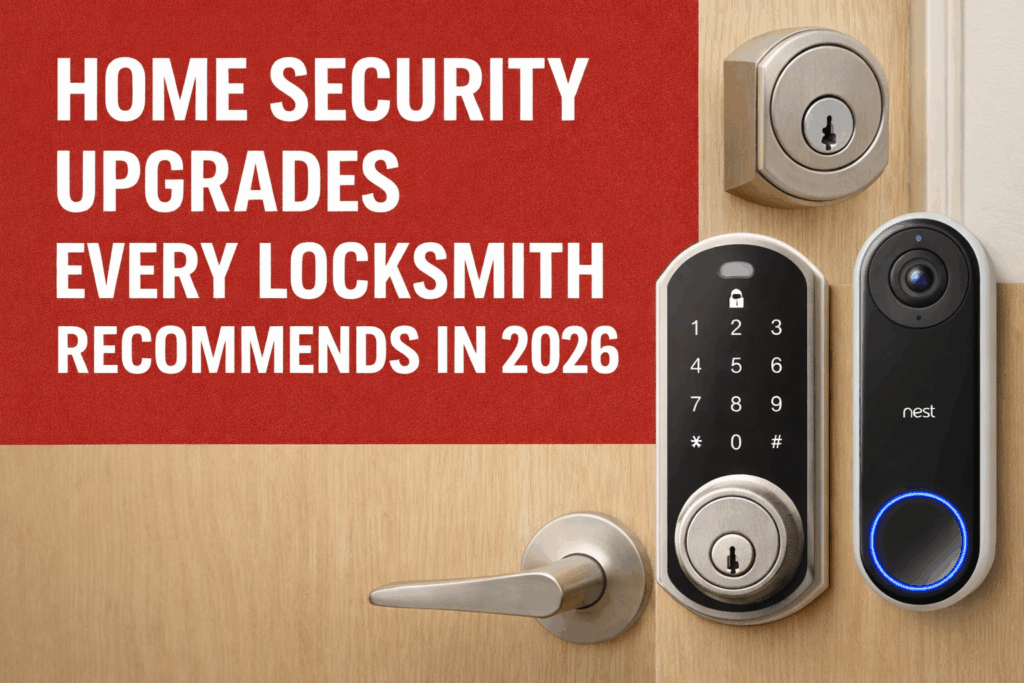
Home security is changing fast, and what worked a few years ago may no longer be enough. Today’s homes face smarter break-in methods, increased package theft, and growing safety concerns. In 2026, homeowners are focusing on upgrades that provide stronger protection, convenience, and peace of mind.
Professional locksmiths see first-hand how intruders gain access to homes, which is why they often recommend practical security improvements that truly work. In this blog, we’ll cover the most important home security upgrades that locksmiths suggest for modern living.
Standard locks may look strong, but many can be forced open with basic tools. High-security deadbolts are designed to resist picking, drilling, and bumping. These locks use reinforced materials and advanced key systems that are much harder to copy.
In 2026, locksmiths strongly recommend installing at least one high-security deadbolt on every exterior door. These locks provide a strong physical barrier and remain one of the most reliable ways to stop forced entry.
Smart locks are no longer just a trend—they have become a trusted security upgrade. Modern smart locks allow homeowners to lock and unlock doors using a phone, keypad, or fingerprint. Many models also send alerts when the door opens.
In 2026, locksmiths recommend smart locks with auto-lock features, activity logs, and remote access. These features help homeowners monitor who enters their home and ensure doors are never accidentally left unlocked.
A strong lock means very little if the door frame is weak. Many break-ins happen when intruders kick the door and break the frame, not the lock. Reinforced strike plates and heavy-duty door frames add much-needed strength.
Locksmiths often suggest upgrading to longer screws and metal-reinforced strike plates. These small changes make doors far more resistant to force and greatly reduce the chances of a successful break-in.
Sliding doors are one of the most common weak points in a home. They are often easy to lift or slide open if not properly secured. Standard latches alone are not enough to protect these doors.
In 2026, locksmiths recommend adding sliding door bars, track locks, or pin locks. These upgrades prevent doors from being forced open and also protect children from accidentally opening them.
Windows are another common entry point for intruders. Many homes rely on simple window latches that can be easily bypassed. Upgrading window locks improves security and helps protect your family.
Locksmiths now suggest combining strong window locks with window sensors. These sensors trigger alerts when a window is opened unexpectedly, adding an extra layer of protection to your home.
Traditional keys can be lost, copied, or misplaced, creating security risks. Keyless entry systems remove this problem by using codes or biometric access instead of keys.
In 2026, locksmiths recommend keyless systems for families, rental properties, and busy households. You can easily change access codes and control who enters your home without worrying about spare keys falling into the wrong hands.
Knowing who is at your door before opening it is essential for home safety. Modern door viewers and smart doorbells provide clear video and audio communication with visitors.
Locksmiths recommend smart doorbells that allow real-time monitoring and recording. These devices help prevent unwanted visitors, reduce package theft, and provide evidence if suspicious activity occurs.
Garage doors are often overlooked, yet they are a common access point for intruders. Many garages have weak locks or outdated systems that are easy to manipulate.
Locksmiths recommend upgrading garage door locks and securing the door that connects the garage to your home. Smart garage locks and reinforced entry doors add strong protection where it’s often needed most.
Good lighting plays a big role in home security. Dark areas around doors, driveways, and windows give intruders places to hide. Bright, well-placed lighting discourages unwanted activity.
In 2026, locksmiths often suggest motion-sensor lights near entrances. These lights turn on automatically when movement is detected, increasing visibility and making your home less attractive to intruders.
Even the best security systems need maintenance. Locks can wear out, loosen, or become outdated over time. Regular inspections help ensure everything is working properly.
Locksmiths recommend having your locks checked every few years, especially after moving, renovations, or security concerns. Staying proactive keeps your home protected and prevents small issues from turning into major problems.
Home security in 2026 is about combining strong physical protection with smart technology. From high-security deadbolts to smart locks and reinforced doors, these upgrades help protect what matters most. Locksmith-recommended improvements are practical, effective, and designed to stop real-world threats.
Investing in the right security upgrades today can save you stress, loss, and danger tomorrow. A well-secured home offers comfort, confidence, and peace of mind for you and your family.
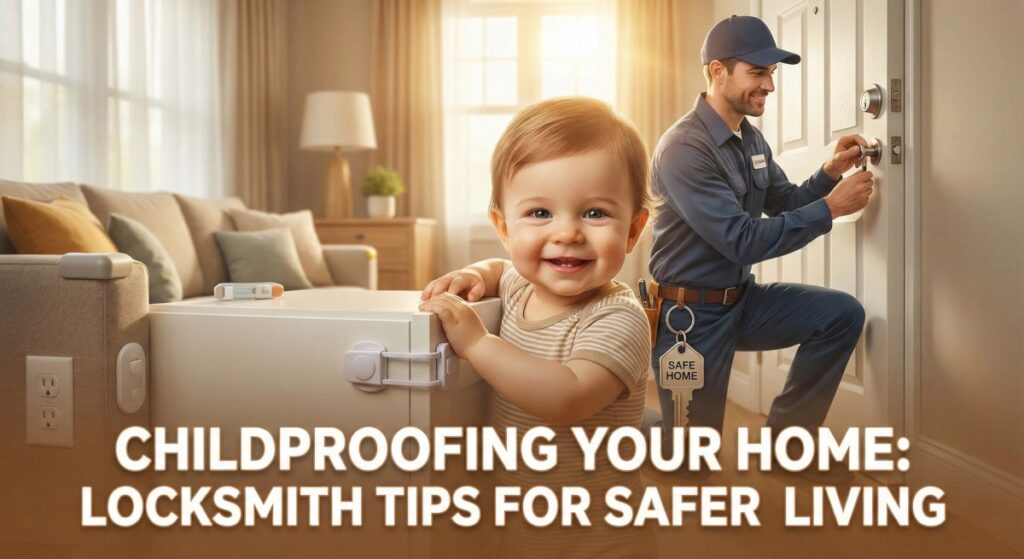
Keeping children safe at home is one of the biggest responsibilities for parents. Kids are naturally curious, always exploring and touching things around them. While this curiosity helps them learn, it can also expose them to risks if the home is not properly secured. Many parents think of childproofing in terms of covers, gates, or furniture protection, but door locks and home security are just as important for keeping kids safe.
In this blog, we will share simple and practical locksmith tips that can help you childproof your home and create a safer environment. These tips are easy to understand and can make a big difference in preventing accidents or unauthorized access.
One of the most effective ways to protect children is by installing childproof locks on doors inside the home. Some rooms, like bathrooms, storage areas, or laundry rooms, contain items that can be dangerous for kids. A childproof lock helps keep curious little ones from entering these spaces without supervision.
There are many types of childproof locks, such as door knob covers, lever handle locks, and top-mounted sliding locks that children cannot reach. Make sure to choose locks that are easy for adults to use but difficult for children to open. This simple update can prevent many common household accidents.
Children often love exploring, and sometimes they can wander outside without anyone noticing. This can be dangerous, especially if your home is near a road, pool, or open area. Installing high-positioned locks or additional deadbolts on exterior doors helps prevent kids from opening them.
These locks are installed above a child’s height, making it hard for them to reach or operate. Even if your child understands how to open a regular lock, a high lock adds an extra layer of protection. This ensures they stay safely inside unless an adult is with them.
Sliding doors and windows are common in many homes, especially those leading to patios, balconies, or backyards. Kids can easily unlock or slide them open, creating a risk of falling, wandering outside, or getting hurt.
You can install simple security bars, track locks, or pin locks to prevent children from opening these doors and windows. These tools make it harder for little hands but still allow adults to open them conveniently. Keeping sliding doors and windows secured also improves overall home safety.
Many household items—like medications, cleaning supplies, tools, or sharp objects—are kept inside cabinets. While adults know these items are dangerous, children may not understand. Installing cabinet locks is one of the easiest ways to prevent accidents.
There are many types of cabinet locks, including magnetic locks, adhesive locks, and latch-style locks. Choose one that suits your cabinet design and is strong enough to keep kids out. This step helps ensure your child cannot access anything harmful, even if you turn your back for a moment.
Keyless entry systems offer excellent security, especially for families with kids. These systems use codes or smart features instead of traditional keys, which means children cannot accidentally unlock doors or misplace keys.
You can manage the lock using your phone and even control who can enter your home. Some systems allow temporary codes, automatic locking, and alerts when the door opens. These features give you more control and keep your home safer, especially when children are around.
Door alarms are helpful tools that alert you when a door is opened. This is especially useful if your child tends to roam around the house. When a door alarm is triggered, you’ll hear a sound or receive a mobile notification depending on the type of system you choose.
These alarms work well on exterior doors, basement doors, or doors leading to dangerous areas. Door alerts not only help with child safety, but they can also improve home security by notifying you of unexpected entry.
Children often imitate adults, and if they see keys lying around, they may try to use them. This can lead to kids unlocking doors, getting into things they shouldn’t, or even locking themselves in rooms.
Make sure to store your spare keys in a safe place, high enough where children cannot reach. Avoid leaving keys on tables, low shelves, or inside bags they can access. Keeping keys secure also prevents the risk of losing them or having them misplaced.
Garage and basement spaces often contain tools, chemicals, and equipment that can pose serious risks to children. These areas should always remain locked when not in use.
Using strong deadbolts or keypad locks can help keep these rooms off-limits. Even if your child manages to open an interior door, an additional lock will stop them from entering dangerous spaces. Taking this precaution greatly reduces the risk of accidents.
While locks are essential, teaching children simple safety rules is equally important. Explain to them which rooms or items are dangerous and why they should not open doors without permission.
Keep the conversation simple and friendly so that they understand rather than fear the rules. Consistent reminders help them learn good habits and reduce risky behavior as they grow older.
Childproofing is not a one-time task. As your child grows, their abilities change, and they may learn how to open things that were once out of reach. Regularly check all locks, safety devices, and childproof tools to make sure they are still working well.
If something feels loose, worn out, or easy for your child to open, replace or upgrade it. Staying updated with your safety measures keeps your home secure as your child’s curiosity grows.
Creating a childproof home is all about protecting the people you love most. With the right locks, safety tools, and awareness, you can prevent accidents and ensure your child explores their world safely. These locksmith tips are simple, practical, and effective for every household. A safer home means more peace of mind for you and a more secure environment for your child to grow.