Your Key to Protection
Licensed In VA, MD, DC
"Your Key to Protection"

Call for a FREE quote:
Call for Service:
Call for Service:
Getting locked out of your home is one of the most frustrating situations anyone can face. It often happens at the worst possible time—late at night, during bad weather, or when you’re in a hurry. Many people panic or try unsafe methods to get back inside, which can lead to damage or even injury.
The good news is that a home lockout can be handled calmly and safely if you know what to do. In this guide, we’ll walk you through simple, practical steps to follow during a lockout situation and how to avoid making costly mistakes.
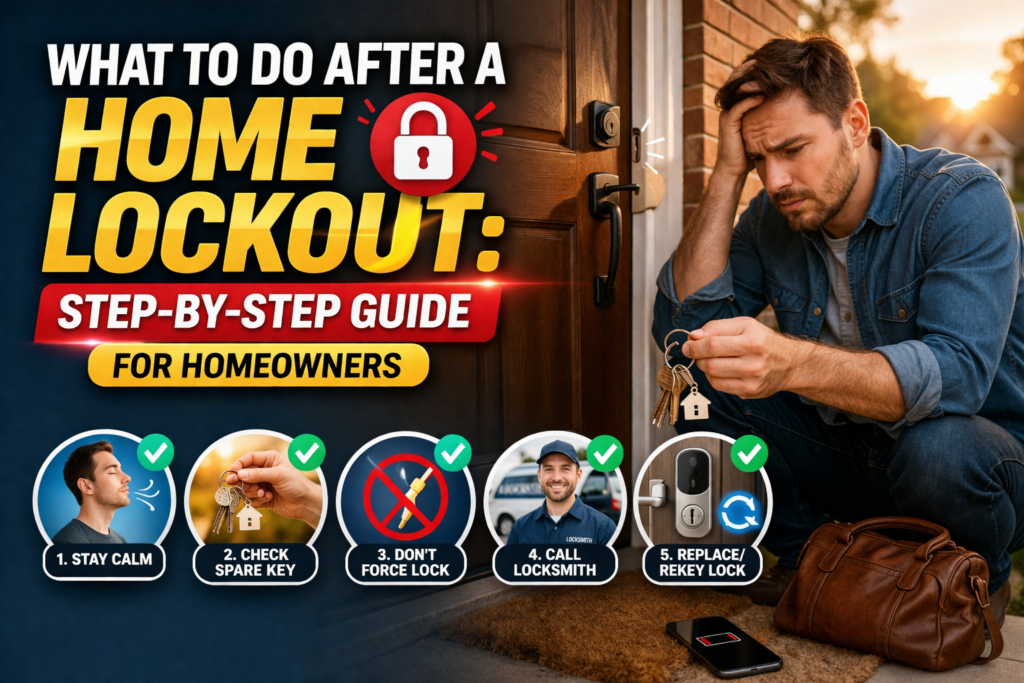
The first and most important step is to stay calm. It’s easy to feel stressed or frustrated, but panicking won’t help you solve the problem. Take a deep breath and think clearly about your situation.
Check all doors and windows around your home. Sometimes, a back door or window may be unlocked. Walk around carefully and see if there’s a safe way to enter without forcing anything.
Staying calm helps you make better decisions and reduces the chances of damaging your property.
Before trying anything else, think about whether you have a spare key available. Many homeowners keep a spare key with a trusted neighbor, friend, or family member.
If you have someone nearby who holds a spare key, contact them for help. This is usually the fastest and safest way to regain access to your home.
If you don’t have a spare key, this situation can be a good reminder to create a backup plan for the future.
One of the biggest mistakes people make during a lockout is trying to force the door open. Kicking the door, using tools, or trying to break the lock can cause serious damage.
Not only can this damage your door and lock, but it may also cost much more to repair than simply calling a professional. In some cases, you may even injure yourself while trying to force entry.
It’s always better to choose a safe and professional solution instead of risking damage or harm.
If you cannot find a safe way to enter your home, the best option is to call a professional locksmith. Locksmiths are trained to handle lockouts quickly and without causing damage.
They have the right tools and experience to unlock doors safely. Most locksmiths can get you back inside within minutes.
Make sure to choose a reliable and trusted locksmith service. A professional will also check your lock afterward to ensure everything is still working properly.
When a locksmith arrives, they will usually ask for proof that you live at the property. This is an important step to protect homeowners from unauthorized access.
You can show identification, a utility bill, or any document that confirms your address. If your ID is inside the house, the locksmith may verify your identity after you regain access.
This process ensures your home remains secure while solving your lockout problem.
After a lockout, it’s a good idea to think about your home security. If you lost your keys or suspect they may be in the wrong hands, rekeying or replacing the lock is a smart step.
Rekeying changes the internal mechanism of the lock so old keys no longer work. Replacing the lock gives you a completely new system.
Both options help ensure that only you and your trusted family members can access your home.
Once you’re back inside, take steps to prevent future lockouts. Having a spare key can save you a lot of stress next time.
You can give a spare key to someone you trust or use a secure lockbox outside your home. Avoid hiding keys in obvious places like under the doormat or flower pots, as these are the first places intruders check.
Planning ahead can turn a stressful situation into a minor inconvenience.
Modern technology offers solutions that can completely eliminate lockout problems. Smart locks and keyless entry systems allow you to unlock your door using a code, phone, or fingerprint.
These systems remove the need for physical keys, which means you won’t have to worry about losing them. Some smart locks even allow remote access, so you can unlock your door from anywhere.
Upgrading your locks can improve both convenience and security.
It’s always a good idea to keep important contact numbers saved in your phone. This includes a trusted locksmith, a nearby friend, or a family member.
Having these contacts ready can save you time during an emergency. Instead of searching for help under stress, you’ll know exactly who to call.
Preparation is key to handling unexpected situations smoothly.
A lockout can be frustrating, but it’s also a learning opportunity. Think about what caused the situation and how you can avoid it in the future.
Maybe you forgot your keys, misplaced them, or relied on a single entry point. Identifying the cause helps you make better decisions moving forward.
Simple changes, like double-checking your keys or upgrading your locks, can prevent the same problem from happening again.
Getting locked out of your home can be stressful, but it doesn’t have to turn into a disaster. By staying calm, avoiding risky actions, and calling a professional when needed, you can resolve the situation safely and quickly.
Taking preventive steps afterward—like creating spare keys or upgrading to smart locks—can help you avoid future lockouts. A little preparation goes a long way in keeping your home secure and your life stress-free.